SeedsResearchIdeasSynthesis
Projects
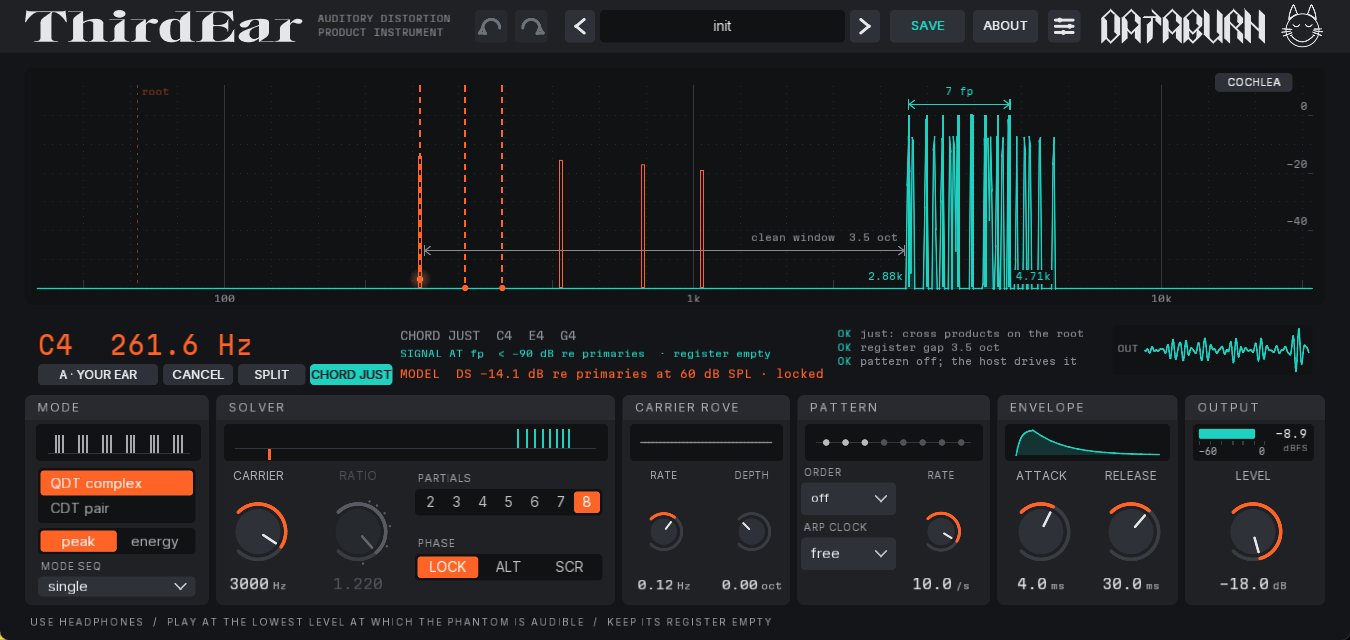
ThirdEar plays a comb of tones, or a close pair, above the note you press, and your own cochlea supplies the note itself. The pitch you hear is a distortion product: it is in your head, not in the file. Two modes from the literature, a phase control, and eleven presets named after the experiments they reproduce. Hold a chord and every key sounds its own phantom, tuned just so the products the combs make with each other land on the root of the chord. SPLIT sends half the comb to each ear: a product needs its tones in one cochlea, so the note moves an octave up. The COCHLEA view shows where each tone is felt and where the note is heard. A/B swaps what your ear makes for a real note from the speaker, and CANCEL cancels the phantom with a tone of your own. Use headphones, at the lowest level where the phantom is audible.
acidcat takes audio files apart byte by byte: headers, chunks, frame headers, anomalies, repairs. The anatomy pages came out of it, one per format, with inspectors you can hover. nibs the cat runs the theme toggle.
cicada-8 treats bytebeat programs as a population. Each one is a few bytes that sound, sense their neighbours and interfere, on a board with no memory to spare. In the lab.
wheelie keeps a card in bicycle spokes as physics rather than as a sample: a motor law couples the wheel to a control voltage and the card does the rest. A beta: the physics is tested, and the panel may still change before 1.0.